

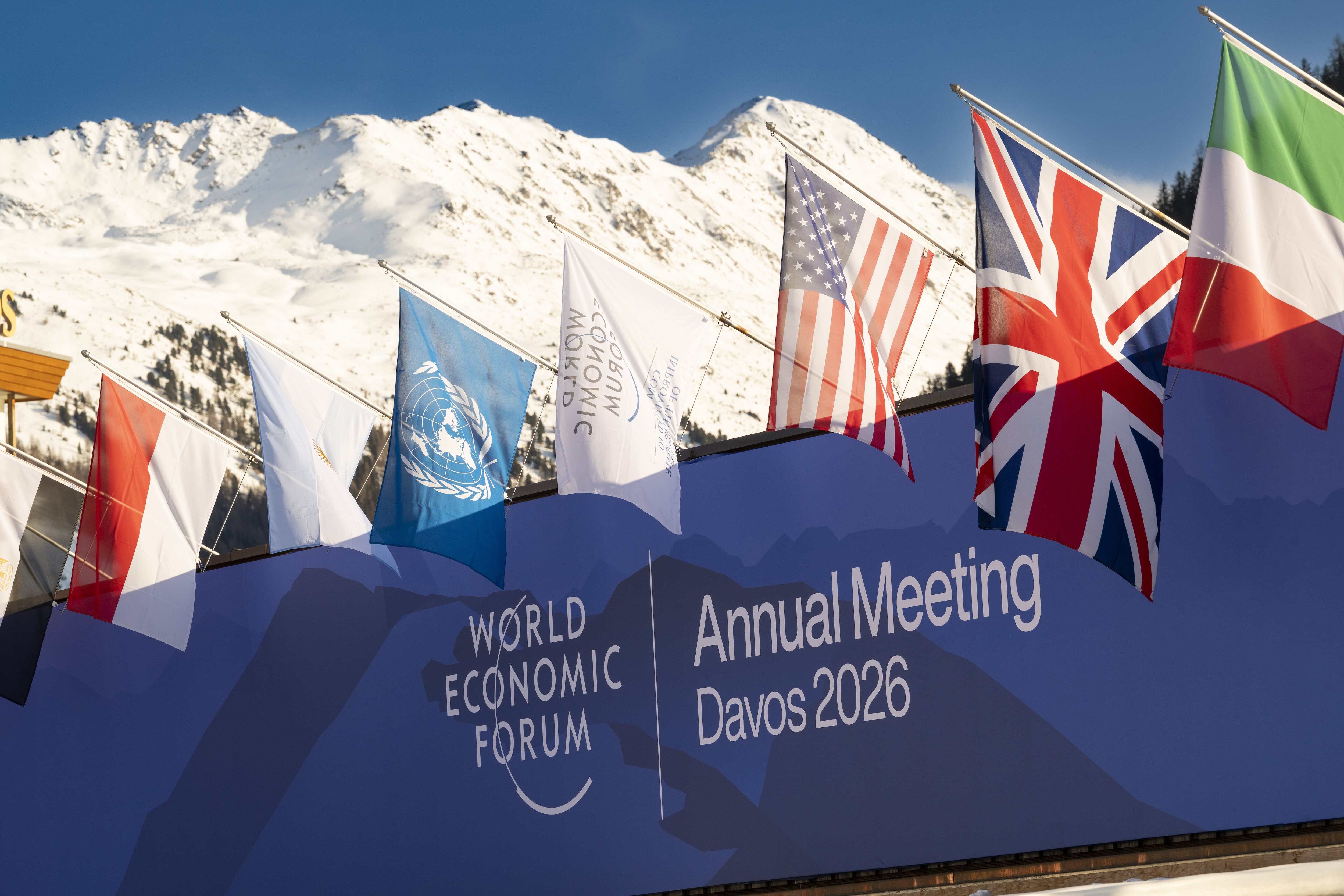
The 56th Annual Meeting of the World Economic Forum, held in Davos, Switzerland, from January 19th to 23rd, 2026, was more than just a gathering of the global elite. Against a backdrop of geopolitical fragmentation, rapid technological upheaval, and a palpable sense of disorientation, the meeting marked a definitive shift in how global power is perceived and exercised . The overarching theme, “A Spirit of Dialogue,” served as a pointed, almost melancholic reminder of a collaborative ethos that many leaders felt was slipping away . Instead of a reaffirmation of the post-Cold War, rules-based international order, Davos 2026 became a stage for its acknowledgement and the articulation of a new, fragmented reality. This was not merely a transition but, as Canadian Prime Minister Mark Carney starkly put it, a “rupture” . The central theme emerging from the snowy Swiss Alps was the redefinition of economic statecraft, where finance, trade, technology, and national security have become inextricably linked in a complex dance of power, resilience, and strategic autonomy.
The forum’s program was built around five key global challenges: cooperation in a contested world, unlocking new sources of growth, investing in people, deploying innovation responsibly, and building prosperity within planetary boundaries . However, the discussions quickly coalesced around the first of these, revealing a deep anxiety about the future of global governance. The “spirit of dialogue” was, in essence, a call to manage fragmentation rather than a celebration of unity. The record participation of over 60 heads of state and 400 senior government officials underscored the high stakes, but the conversations themselves were often guarded and focused on national interest . This article explores the key dimensions of this redefined economic statecraft as they were debated in Davos, highlighting the transition from a rules-based order to a bargain-driven one, the heightened role of technology and sovereignty, and the emergent strategies for nations and businesses navigating this contested landscape.
I. From a Rules-Based Order to a Bargain-Driven World
The most significant takeaway from Davos 2026 was the collective, albeit reluctant, acknowledgement that the rules-based international order, as it once functioned, is no longer the primary governing framework for global affairs . The language of international law and multilateral consensus has given way to the language of leverage, deals, and strategic geography. This transition from rules to bargains was evident in the speeches and private discussions of nearly every major leader present .
A. The American Vision: Instrumental and Transactional
The United States, under President Donald Trump, presented a vision of international relations that was unapologetically instrumental. Order was not conceived as a moral framework or a set of shared principles but as a byproduct of successful deals . Tariffs, trade imbalances, and strategic geography were framed as primary tools of statecraft. The rhetoric around Greenland was a stark example; territorial questions were posed not as legal absolutes but as negotiable strategic assets where economic and even military pressure were legitimate instruments for negotiation . This transactional worldview placed alliances, including the historic NATO partnership, under a new scrutiny, viewing them less as sacrosanct institutions and more as arrangements contingent on burden-sharing and reciprocal benefits . President Trump’s “America First” approach, as articulated in Davos, signaled a clear departure from the role of the U.S. as the primary guarantor of a liberal international order.
B. The European Response: Strategic Autonomy as Survival
Europe’s response to this American stance was one of hardened resolve. Leaders like European Commission President Ursula von der Leyen and French President Emmanuel Macron made it clear that the era of comfortable transatlantic dependence was over . “Nostalgia will not bring back the old order,” von der Leyen stated, urging a “new independent Europe” . Strategic autonomy, once a contested concept debated in policy papers, was reframed as a matter of survival . The discussions went beyond mere rhetoric. Europe’s push for self-reliance now encompasses security, defense industrial capacity, energy, and critically, finance. A key moment was the realization that Europe must develop deeper and broader pools of capital to fund its future growth and strategic objectives, a point underscored by a comparison of data-center securitization between the U.S. and the EU . The continent’s leaders acknowledged that principles of sovereignty and territorial integrity, particularly regarding Ukraine, were non-negotiable and could not be traded away in a transactional deal . For Europe, the new order demands that its principles be backed by credible power and material investment.
C. Asia and the Global South: Charting an Independent Course
While the U.S. and Europe appeared to be heading in divergent directions, Asian powers, led by China, sought to position themselves as “stable poles” in an increasingly volatile world . Chinese Vice-Premier He Lifeng presented China as a defender of globalization and multilateral economic cooperation, warning against unilateralism and zero-sum thinking . This narrative positions Beijing as a beneficiary of the transatlantic rupture, offering an alternative to the perceived volatility of the U.S. and the uncertainty of a Europe in transition. However, China’s language on sovereignty was deliberately abstract, focusing on respect and non-interference without endorsing Western stances on conflicts like Ukraine, a calculated ambiguity that allows for strategic flexibility .
Leaders from the Global South, such as Indonesian President Prabowo Subianto, articulated a fundamentally different set of priorities. For Indonesia, sovereignty is less about borders and more about resilience: food, energy, and development security . They viewed the “contestation” between the great powers not as a primary concern but as a source of risk to their own development goals. This development-first lens underscores a significant divide between the Euro-Atlantic security debates and the immediate needs of emerging economies. They are seeking to navigate the new world of economic statecraft by diversifying partners and building national capacity to ensure they are not merely collateral damage in a great-power competition.
II. The Weaponization of Interdependence: A New Economic Reality
The core of the new economic statecraft lies in the explicit recognition that economic interdependence, once considered a guarantor of peace, is now a vulnerability to be managed and a weapon to be wielded . This paradigm shift was the driving force behind the intense discussions on trade, supply chains, and finance.
A. Trade as a Tool of Geopolitics
Trade was a major topic of discussion, with a broad consensus that the current shifts are structural, not cyclical . The era of using trade primarily for economic efficiency is over. Now, tariffs, export controls, and investment screening are commonplace instruments of statecraft . The very idea of “free trade” is being re-evaluated, with national security and domestic industry priorities taking precedence. President Macron’s framing of this was significant: “Protection doesn’t mean protectionism,” he stated, justifying the new industrial policies as a means to ensure national and economic security . The global scramble for critical minerals, now widely viewed as “the new oil,” exemplifies this shift, driving a new form of geopolitical competition and cooperation . The implication for businesses is clear: the global trading system they have operated within for decades is being fundamentally rewritten.
B. Supply Chains: From Just-in-Time to Just-in-Case
The concept of the supply chain was reframed from an operational issue to a cornerstone of national security . The post-Cold War model of “just-in-time” efficiency, which created long, fragile, and often single-source-dependent supply chains, is being abandoned in favor of “just-in-case” resilience. The private debates at Davos focused on “de-risking” rather than outright “decoupling,” a subtle but important distinction . This means reducing dependence on geopolitical rivals, such as reliance on China for rare earths and critical minerals, while maintaining some economic ties . Strategies for achieving this resilience include geographic proximity, regional diversification (a “friend-shoring” approach), and creating “smart stockpiles” of critical resources . This massive rewiring of global production networks will be expensive and take years, but it was identified as a non-negotiable priority for nations aiming to protect their economic sovereignty.
C. Financial Statecraft and the Search for Stability
Finance itself has become a critical domain of economic statecraft. The discussions in Davos highlighted that even the global financial system is being re-evaluated through a security lens. A key question was posed: should Europe rely on American-owned payments rails for its economic security? . This reflects a broader anxiety about depending on the infrastructure of a potential strategic competitor.
The scale of capital required for this new era is staggering. Massive investments are needed for energy resilience, domestic data centers for AI, and advanced defense manufacturing. This immense capital demand is reshaping markets and creating new forms of investment. The securitization of US data-centre debt reached $63.6 billion since 2018, dwarfing Europe’s $0.8 billion, highlighting the investment gap the EU must close . At the same time, high levels of public debt in many countries raise the risk of “buyers’ strikes” in major fixed-income markets, which could stymie these necessary investments . This fiscal reality reinforces the “de-risking” strategy—nations must be selective and strategic about where they allocate capital to build resilience. Investors, for their part, are rethinking diversification, exploring asset-based lending in private credit, and turning to safe-haven assets like gold to navigate the volatile landscape .
III. Artificial Intelligence as the New Sovereign Frontier

Artificial intelligence has been a topic of discussion at Davos for years, but in 2026, its role was fundamentally elevated. AI is no longer just a tech story; it is a macroeconomic force, a driver of vast capital expenditure, and, most critically, a new form of sovereignty . The question is no longer simply about what AI can do, but about who owns the data, who controls the chips, who builds the foundational models, and who has the regulatory authority to operate them within their borders .
A. The Macroeconomic Impact
The sheer scale of investment in AI was a major talking point. The spending boom on data centers and infrastructure is comparable in relative terms to major historical economic shifts, such as the U.S. shale boom of the 2010s . This investment is a significant economic driver, but it also introduces profound financial risk. A sharp pullback in AI spending could trigger a recession, while the hyper-positive outcome—massive AI-driven productivity gains—could lead to significant job displacement and social dislocation, as gains in GDP might not be matched by gains in employment . This creates a dilemma for central banks like the U.S. Federal Reserve, which must balance its dual mandate of controlling inflation and supporting employment in an era where the AI economy is unpredictable .
B. AI and Geopolitics
The geopolitical dimension of AI was even more pronounced. The ability to develop and deploy cutting-edge AI is now intrinsically linked to national power and security. A “state that does not build its digital sovereignty will find itself a consumer in a world where influence is measured by who owns the platform—not by who purchases the service,” as one analysis of the post-Davos mood put it . This is driving a global race for technological leadership, with nations like the U.S., China, and Europe (via its pursuit of “strategic autonomy”) vying for dominance. Europe’s new urgency to close its investment gap in technology and finance is a direct response to this new reality . Companies are now expected to “internalize geopolitical risk,” and states are relying on private actors to execute strategic goals, such as building the physical and digital infrastructure of the AI economy .
IV. Conclusion: Living the Questions
Davos 2026 did not provide a new blueprint for global order; it was far too fractured for that. However, it served as a vital diagnostic, clarifying the stakes and the new realities facing the world. It was an event where leaders, as the poet Rilke might have put it, were forced to “live the questions now” . The central question is no longer whether the old order can be restored it cannot. Instead, the task ahead is to manage a new kind of global cooperation, one that is more bespoke, more interest-based, and inherently less stable .
The world is entering an era of contested orders, where power is as important as principle, and sovereignty is a concept to be actively defended . The shape of this new order is being negotiated in real-time, one deal, one tariff, and one AI model at a time. For nations, the imperative is to build strategic autonomy by diversifying supply chains, securing critical resources, and investing in technological sovereignty. For businesses, the challenge is to navigate this “disorienting” landscape by internalizing geopolitical risk and building resilience into their operations . The “Spirit of Dialogue” from Davos may seem like a faint echo, but the need for cooperation remains acute. The new realities of fragmentation make it more difficult, but also more necessary, to find common ground on issues ranging from AI governance and cybersecurity to climate change and financial stability. The post-Davos world is one where a philosophical mindset disciplined about risk, skeptical of easy narratives, and clear-eyed about what can and cannot be controlled may be the most useful tool for leaders to navigate the uncertainty.