
The financial services industry is undergoing a monumental transformation, marking a definitive shift from the digital banking era to what industry experts and leading institutions are calling the “Agentic Finance Era”. This new epoch is defined by the integration of autonomous artificial intelligence (AI) agents that do not just assist human workers but actively participate as digital colleagues capable of reasoning, planning, and executing complex financial tasks with minimal human intervention.
While the previous years were characterized by the hype and pilot projects of generative AI and chatbots, 2026 has crystallized as the year of execution. Banks are moving beyond simple automation to deploy sophisticated “agentic” systems that are fundamentally rewiring the operational DNA of global finance, promising unprecedented efficiency, scalability, and a new competitive landscape.
Understanding Agentic AI vs. Traditional Automation
To fully grasp the magnitude of this shift, it is essential to distinguish agentic AI from its predecessors. Traditional AI, including machine learning, has been used in finance for years, excelling at tasks like identifying patterns, forecasting, and making recommendations within defined parameters. Generative AI, like large language models (LLMs), represented a leap forward by creating new content based on user prompts, summarizing documents, and drafting emails.
Agentic AI, however, operates on a different plane. It combines the predictive power of traditional AI with the generative capabilities of LLMs to create systems that are goal-oriented, autonomous, and adaptable. An AI agent, at its core, is a program that handles tasks and workflows to achieve a specific goal set by a human. Once the goal is set, these agents can plan, select, and use the necessary software tools (like APIs), interact with other agents and systems, and adapt their strategies in real-time based on new information and outcomes.
Key Distinctions:
-
Traditional AI: Reacts to user inputs to provide a prediction or recommendation based on a static, trained model.
-
Generative AI: Creates content (text, code, images) based on a prompt from a user.
-
Agentic AI: Proactively reasons, plans, and executes multi-step workflows to achieve a defined objective, learning and adapting along the way with less human intervention.
This transition from passive content generation to active execution is the fundamental driver of the agentic finance era. It represents a re-architecting of financial systems, designed not just for human users clicking through interfaces, but for AI agents acting on behalf of customers, employees, traders, and risk managers.
The Great Refactor: Preparing Core Systems for Agents
The widespread adoption of agentic AI is not merely a software upgrade; it demands a fundamental reconstruction of legacy banking infrastructure. Many large financial institutions run on decades-old code, undocumented business rules, and siloed data stores, creating what is termed “agent-blind technical debt”. This legacy architecture presents a major obstacle, as AI agents cannot rely on human intuition or undocumented institutional memory. They require systems that are “discoverable, understandable, operable, and auditable”.
A critical “Great Refactor” is underway as banks race to modernize their estates. The goal is to create an “agent-ready” financial operating system where:
A. Systems are Annotated: Data, rules, and constraints are made machine-readable so agents can interpret the context of information.
B. Capabilities are Actionable: Systems expose tools and APIs that agents can directly call to perform actions, rather than just reading data.
C. Workflows are Intent-Based: Systems can assemble steps around a user’s intent, moving away from rigid, menu-driven processes.
D. Business Logic is Abstracted: Rules and constraints are codified into policies that agents can reason over to ensure compliance and good judgment.
E. Lifecycles are Autonomised: With proper governance and oversight, parts of the lifecycle are automated to run independently.
Leading banks are already making significant strides in this area. Morgan Stanley, for example, has deployed its DevGen.AI tool to review 9 million lines of legacy code and translate it into plain-English specifications, making it more “legible” for both humans and machines. Similarly, Citi is using AI for data migration and automated coding, with its CTO noting that the agentic approach can be 2 to 20 times faster for certain tasks. Cloud hyperscalers, like Amazon Web Services (AWS), have found that in many cases, over 40% of business rules are embedded solely in code with no supporting documentation, highlighting the scale of the modernization challenge.
The New Digital Workforce: Humans and AI Agents Collaborating
The integration of agentic AI is creating a new paradigm for the financial workforce, often described as a “dual workforce” where human employees and AI agents collaborate as colleagues. This is a shift from “AI-assisted” humans to “human-supervised” AI workflows. The goal is not to replace human bankers, but to amplify their capabilities and eliminate the friction that prevents them from doing their best work, such as navigating complex systems or performing repetitive manual tasks.
Role-Based AI Agents
Technology providers are developing specialized AI agents tailored to specific roles within a financial institution, each designed to handle distinct workflows and pain points.
A. Executive Digital Partner: Provides strategic intelligence for C-suite decision-making by delivering market insights, portfolio intelligence, and data science expertise.
B. Analyst Digital Partner: Accelerates risk assessment and complex financial analysis for underwriters and credit analysts. For instance, Moody’s has found that its AI Research Assistant allows users to consume 60% more research while cutting task completion times by 30%, with over 90% of interactions now focused on high-value analytics.
C. Service/Relationship Digital Partner: Enhances customer and member relationship management by identifying cross-sell opportunities and providing timely insights to relationship managers.
D. Processor/Operations Digital Partner: Eliminates workflow bottlenecks by coordinating documentation, scheduling communications, and validating compliance requirements.
E. Client Digital Partner: Delivers AI-enhanced self-service digital banking experiences directly to customers and members.
Practical Applications in Core Banking Functions
Agentic AI is being deployed across a spectrum of critical banking operations, delivering transformative results.
1. Know Your Customer (KYC) and Compliance:
KYC has historically been a slow, costly, and highly manual process. Agentic AI is revolutionizing this by reimagining the end-to-end lifecycle. AI agents can now:
-
Ingest and classify documents, extracting key data points with high accuracy.
-
Identify missing documents or data and generate a source of wealth narrative for review.
-
In one European bank, this agentic approach reduced the time for complex case ingestion by 99% and costs by 94% while raising quality. At another global bank, agents are supporting the full value chain, allowing human KYC analysts to focus on high-value investigative work rather than manual data processing.
2. Software Engineering and Legacy Replacement:
Financial institutions are using fleets of AI agents to accelerate the modernization of their own systems. Accenture described an agentic architecture where specialized agents collaborate with software engineers:
-
Software Development Agents: Write new, modern code based on user requirements.
-
Critique and Testing Agents: Automatically review, test, and debug the new code.
-
Improvement Agents: Iterate on the code until acceptable quality is achieved.
This approach delivered remarkable results for a major bank, making development 30% more efficient (saving approximately £15m), improving documentation by 40%, and reducing rework by 25%.
3. Credit Underwriting and Risk Assessment:
Agentic AI is moving credit risk assessment from a sequential, fragmented manual process to real-time, model-driven decisioning. Techcombank, for example, has unified identification, analysis, and decisioning through real-time model interaction, delivering measurable impact after a full workflow redesign. AI agents can continuously evaluate borrower solvency, adapt to shifting economic conditions, and suggest responses for complex credit scorecards, leading to faster and more consistent decisions.
4. Customer Service and Collections:
AI agents are enhancing customer interactions across channels. In collections, for instance, agents can automate call summarization, reducing after-call work (AHT) for bankers. They can also analyze call sentiment and tone for compliance adherence, providing instant feedback to improve professionalism and reduce regulatory risk. For customer service, agents can understand the intent of an email or chat, draft personalized responses, and trigger follow-up actions, creating a more efficient and responsive service.
Measuring Success in the Agentic Era

As banks invest heavily in agentic AI, measuring its success becomes paramount. Traditional metrics like simple cost savings or short-term efficiency gains are inadequate to capture the structural impact of this technology.
A. Efficiency and Operational Metrics:
Banks will track improvements in speed, accuracy, and cost. Examples include measuring the reduction in case processing time (e.g., the 99% reduction in KYC ingestion time), the percentage increase in code review frequency, or the improvement in fraud detection rates. Leaders like JPMorgan Chase are already seeing tangible results, with its AI efforts estimated to have improved its efficiency ratio by 100 to 200 basis points.
B. Decision Quality and Resilience:
Success is also defined by improvements in decision quality. Metrics should capture how AI contributes to better underwriting outcomes, more accurate risk models, and more responsive fraud detection. The ability to handle high-volatility events or major market shocks without system failure—what analysts call the “Validation Period”—will be a key test of resilience.
C. Human-AI Collaboration:
A key measure of success is how effectively employees are interacting with AI. Institutions need to assess whether staff understand and trust AI-generated outputs and can integrate them into their workflows. The “AI productivity dividend” will be reflected in the ability of a single individual to lead a team of AI co-workers to deliver exponentially greater output, a concept known as the “10× bank”.
D. Long-Term Capability and Competitive Advantage:
Ultimately, the most decisive metric will be the speed at which banks embed AI into their operating fabric. As one industry executive noted, “In the future there will be only two types of banks: AI bank or other banks”. The competitive gap between early and late adopters is expected to widen quickly. McKinsey estimates that operations represent 60-70% of a bank’s cost base, making the transformation of these processes via agentic AI an unprecedented value unlock. Banks that successfully embed AI will gain a structural advantage that is increasingly difficult for rivals to replicate.
Navigating Governance, Risk, and Compliance
The rise of autonomous agents introduces significant governance and risk management challenges. Financial institutions operate in a tightly regulated environment where explainability, accountability, and compliance are non-negotiable. AI agents that can independently make decisions raise critical questions: If an AI makes a biased lending decision or inadvertently violates a compliance rule, who is responsible? How can the logic of a multi-step, autonomous workflow be audited?.
The New Regulatory Landscape
Regulators are rapidly responding to the agentic shift.
A. Licensing and Accountability: In early 2026, the U.S. Consumer Financial Protection Bureau (CFPB) issued a landmark ruling that erased the distinction between human employees and AI agents. AI systems acting as loan officers or financial advisors must now be registered in the Nationwide Multistate Licensing System (NMLS). Banks are being held strictly liable for “algorithmic bias” or errors made by their autonomous agents under Regulation B.
B. Transparency and Explainability: The Securities and Exchange Commission (SEC) has increased its policing of “AI-washing,” demanding that firms provide clear, explainable logic for how their agents make multi-step financial decisions. Financial institutions must now invest in explainable AI (XAI) models that provide clear reasoning behind AI-generated decisions.
C. Auditability: In a properly designed agentic system, audits can become more direct. Rather than scrutinizing lines of code and logs, regulators and internal auditors can query the system in plain English to see how a decision was reached. This requires designing systems with transparent mechanisms for auditability, ensuring that financial professionals can interrogate AI-generated outputs and override decisions where necessary.
Risk Management
To manage these risks, institutions are implementing robust governance frameworks that emphasize “human-in-the-loop” oversight for critical decisions. This means a human remains in charge of the change and is responsible for guiding how these new AI collaborators are deployed.
A. Guardrails and Controls: Responsible adoption requires building clear guardrails to ensure AI agents meet compliance and regulatory requirements. This includes enforcing policies, performing real-time validation checks, and creating autonomous quality assurance processes to ensure outputs remain aligned with institutional policies and regulatory requirements.
B. Managing Model Risk: In multi-agent systems, the interactions between models can create new, unforeseen risks, such as “hallucination risks” where agents produce incorrect outputs. Firms must monitor for network-level resilience and the stability of model-to-model interactions. Advanced systems are beginning to incorporate majority voting mechanisms among multiple AI models to reduce error rates and prevent reliance on any single potentially biased model.
C. The “Validation Period”: The next six to twelve months are being called the “Validation Period.” This will be a critical test of whether these agentic systems can handle a major market shock or high-volatility event safely and without catastrophic failure.
The Competitive Divide: AI Banks and Other Banks
The agentic finance era is creating a clear competitive divide. The leaders are large-cap banks like JPMorgan Chase, Bank of America, and Goldman Sachs, which possess the massive balance sheets and data advantages to build proprietary AI “moats”. JPMorgan Chase has increased its technology budget to roughly $18 billion annually, dedicating significant funds to its “OmniAI” platform, which has moved from pilot to over 400 production use cases. Goldman Sachs has introduced “Agent as a Service” (AAS) models, deploying specialized fleets of agents for everything from code generation to credit analysis. Bank of America’s virtual assistant, Erica, has evolved into a proactive agent that manages billions of interactions, autonomously canceling subscriptions, initiating transfers, and even negotiating lower fees for corporate clients, resulting in a reported 55% reduction in fraud losses.
On the other hand, mid-sized and regional banks that lack the capital to compete are at risk of being left behind. The “legacy debt trap” means the cost of maintaining aging systems prevents them from investing in the agentic orchestration layers necessary to lower costs. Cambridge’s research found that fintechs, with their newer and cleaner stacks, are ahead of traditional financial institutions in agentic AI adoption, at 57% versus 45%. These fintechs and AI-native startups, which offer autonomous compliance and back-office solutions, are becoming formidable competitors by offering the efficiency of a lean, AI-driven operation.
The most competitive institutions will not simply be those with the best apps or the largest AI teams. They will be those whose systems can be safely discovered, understood, operated, and audited by agents. As the industry moves towards AI-native institutions, the decisive factor will be the speed at which they can refactor their architecture, redesign their workflows, and empower their people to work effectively with intelligent systems.
The Future of Autonomous Finance
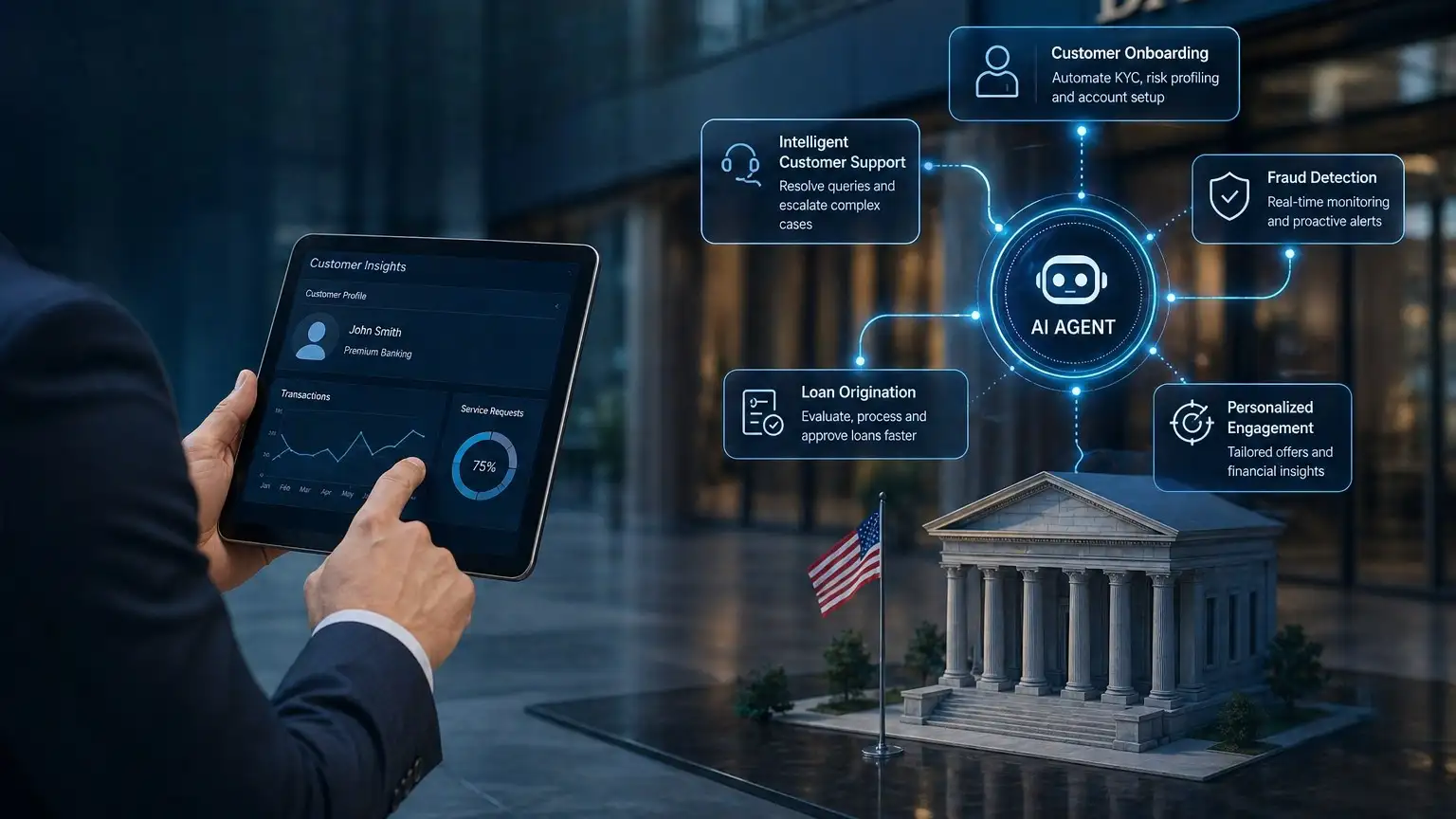
The trajectory of agentic AI suggests a future where “Autonomous Finance” becomes the norm. This isn’t just a marginal improvement; it’s a re-architecting of how capital moves and how financial services are delivered. When an AI agent can execute a trade, manage the risk, and file the regulatory report simultaneously, the traditional settlement cycles begin to look like relics of a slower age. This is forcing a move towards “real-time” operational models across the industry.
Investment firms will deploy AI agents to autonomously monitor markets, detect non-obvious correlations, and optimize portfolio allocations. Credit risk assessment will be augmented with AI agents that continuously evaluate borrower solvency in real time. AI-driven systems will adapt to rapidly shifting economic conditions, better anticipating liquidity risks, geopolitical disruptions, and market shocks.
The role of the human banker is evolving from a doer to a supervisor of autonomous fleets. The future of work in financial services involves a workforce of millions of human and agent workers with significantly greater capacity and capability. The key differentiator will not be whether firms adopt AI, but how effectively they integrate it into their core decision-making processes. While AI is not a replacement for human expertise, it is a catalyst for more informed, efficient, and resilient financial decision-making. Institutions that cultivate AI fluency across all levels of leadership, develop robust AI governance, and foster a culture of human-machine collaboration will be the ones to lead in the new era of agentic finance.
The banking industry is now firmly in the agentic finance era. The technology has moved from a conceptual curiosity to a functional reality that is driving billions in cost savings and efficiency gains. The market is now watching to see which institutions can navigate the risks, govern these powerful tools responsibly, and fully harness the power of their new digital colleagues.