

The cryptocurrency landscape has undergone a radical transformation. What began as an internet joke has evolved into a dominant force, redefining how liquidity flows through decentralized finance. Meme coins, once dismissed as a fringe subculture, have stormed the forefront of the digital asset market, not just as speculative vehicles but as foundational pillars of on-chain liquidity. In 2026, the narrative has shifted. The question is no longer whether meme coins are relevant, but how they have come to command the lion’s share of trading volume and liquidity across major blockchain networks like Solana. This deep dive explores the ascendancy of meme coins, the infrastructure that supports them, and the profound implications for the broader cryptocurrency ecosystem.
The data paints a clear picture: meme coins are the liquidity engines of the crypto market. In 2025, the sector peaked at a staggering $200 billion in market capitalization and generated over $1.2 trillion in annual trading volume, accounting for roughly 18% of total crypto spot activity . While the market has since cooled from its peak, the structural shift is undeniable. Meme coins are not just a passing trend but a permanent, high-velocity segment of the digital economy that dictates capital flow, network activity, and even the revenue of major blockchain platforms.
The Evolution of Meme Coins: From Joke to Infrastructure
The journey of meme coins from an internet punchline to a legitimate asset class is a testament to the power of community and culture in the digital age. This evolution has been characterized by several distinct phases, each marked by increasing sophistication and market integration.
The Genesis: Internet Culture and the First Movers
The early days were dominated by pioneers like Dogecoin (DOGE), which capitalized on the viral nature of the “Doge” meme. These coins were created as a satire of the crypto craze, yet they inadvertently established a blueprint for community-driven value. The initial appeal was simple: low barriers to entry, a fun and relatable brand, and a strong sense of community. This phase was defined by pure speculation and social media hype, with little to no utility beyond the meme itself.
The “Meme Summer” and the Rise of Launchpads
The landscape shifted dramatically in 2024 with the advent of platforms like Pump.fun on Solana. This marked the “Meme Summer,” a period where token creation became democratized. Pump.fun dramatically lowered the barrier to entry, allowing anyone to launch a token within seconds. This innovation turned meme coins from a niche phenomenon into a high-volume, industrial-scale activity. At its peak, Pump.fun was responsible for roughly 70% of all new token launches on Solana, driving on-chain activity to historic highs and generating significant revenue for the network . This era proved that the infrastructure for creating and trading meme coins was just as valuable as the tokens themselves.
The Maturation: The Trinity and Blue-Chip Status
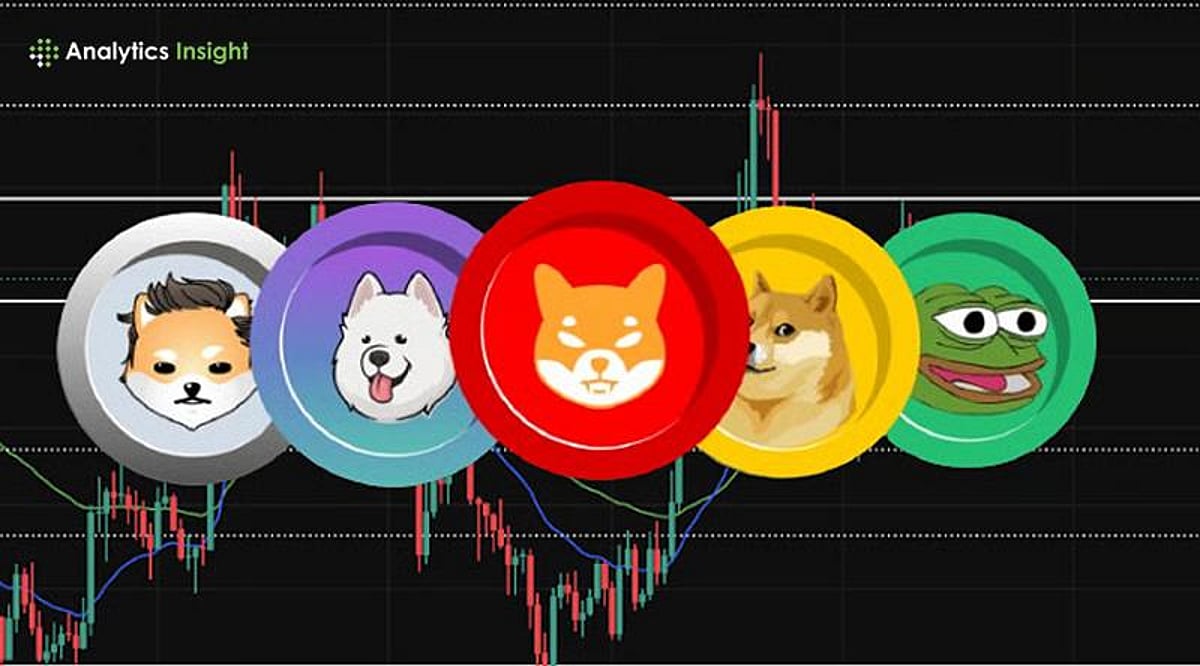
By 2026, the market had matured. A clear hierarchy emerged, led by a group of “Blue Chip” meme coins that commanded the most liquidity and attention. On Solana, this took the form of the “Meme Trinity”: BONK, WIF, and POPCAT. These three assets collectively commanded over 50% of daily retail volume on Solana DEXs, acting as the primary anchors for liquidity . Their ascension to “Blue Chip” status was driven by several factors:
A. Deep Liquidity Pools: These tokens established massive, stable liquidity pools, allowing for large, multi-million dollar trades with minimal price slippage. This feature attracted not just retail traders but also institutional players.
B. Ecosystem Integration: BONK, for instance, became integrated into over 450 decentralized applications, spanning DeFi, gaming, and even physical payments, creating a sustainable utility-driven demand .
C. Professional Trading Tools: The availability of high-leverage futures markets (up to 75x) and the acceptance of these assets as collateral in lending protocols marked a shift from pure gambling to professionalized asset management .
This maturity signifies that the meme coin market is no longer just about fleeting hype. It has developed a stable core of assets that provide the liquidity and stability necessary for the entire ecosystem to function.
The Solana Effect: Why Speed and Low Fees Dominate
While meme coins exist on multiple chains, Solana has emerged as the undisputed home for this activity. The network’s technical advantages have made it the preferred execution layer for high-frequency, speculative trading, creating a powerful “meme engine.”
Unmatched Transaction Speed and Cost
Solana’s architecture offers a significant edge over competitors like Ethereum. Its 400ms block time allows traders to execute “snipes” faster than any other Layer 1, a crucial advantage in the fast-paced world of meme coin trading . The network’s low transaction fees are equally critical. Meme coin trading relies on high volume and rapid turnover; even small fees can eat into profits. Solana’s negligible costs ensure that traders can execute numerous transactions without compromising their margins. The full deployment of the Firedancer validator client further enhanced network throughput, ensuring stability even during viral rallies .
Infrastructure and User Experience
Beyond pure technical metrics, Solana has cultivated the most robust and user-friendly infrastructure for meme coin activity. This includes:
A. Wallets: Wallets like Phantom have evolved into comprehensive financial hubs, incorporating “meme scanners” and automated gas rebates, lowering the barrier to entry for new users .
B. Launchpads: Platforms like Pump.fun serve as a massive “top-of-funnel” filter, where new tokens are created and traded. This ecosystem funnels speculative capital into the network, with successful profits often rotating into more established tokens like the Trinity .
C. Data and Analytics: Services like GMGN provide advanced on-chain data tools, including real-time trending feeds, dev wallet forensics, and token security scoring, which are essential for navigating the high-risk environment .
This combination of speed, low cost, and superior infrastructure has allowed Solana to absorb over 60% of meme capital flows, making it the dominant hub for this sector .
AI Agents and the Automation of the Trenches
The face of meme coin trading has evolved. It is no longer a purely human endeavor. The rise of artificial intelligence (AI) agents has introduced a new, powerful layer of automation to the market, fundamentally changing its dynamics.
The Rise of Autonomous Trading
By mid-2026, AI agents had become a dominant force. These automated wallets grew from accounting for just 8% of daily Solana memecoin DEX volume in March 2026 to a staggering 34% by June . Over 120,000 agent-only wallets operate on Solana alone, executing an average of 11.4 trades daily compared to just 2.1 for human-directed wallets .
These are not the simple “snipe-and-dump” bots of previous years. They are sophisticated, individually deployed AI agents with configurable risk parameters and mechanical execution logic. They employ advanced strategies:
A. Delta-Neutral Market Making: Agents deploy small amounts of capital (e.g., 0.5 to 2 SOL) within 60 seconds of a token’s launch, simultaneously placing staggered sell orders at 1.5x, 2x, 3x, and 5x of their entry point to secure profits quickly .
B. KOL Copy-Trading with Risk Filters: Instead of blindly following “smart money,” these agents evaluate on-chain data, such as holder concentration, liquidity depth, and mint authority, before making a move .
C. Cross-Chain Relaying: Some agents monitor multiple chains (e.g., BNB Chain and Base) to identify the same deployer wallet launching tokens across chains, using this as a signal for a longer-term developer intent .
Implications for Traders
The proliferation of AI agents has created a new paradigm for retail traders. The risk is no longer simply being out-executed; it is misreading agent-driven volume as organic activity. A token can display healthy on-chain metrics while its top holders are all agent wallets with synchronized entry patterns. When these agents collectively exit, often based on shared data sources like GMGN, the token collapses with no retail floor to catch it .
The defense against this requires more sophisticated analysis. Traders must use tools like GMGN to sort holder tabs by percentage held. If agent wallets represent more than 40% of the top 20 holders with synchronized entry timing, it signals a synthetic market. Understanding the “agent washout” pattern, where full agent exits create a crash that often precedes a cleaner second move, is now a baseline survival skill for meme coin traders .
Decentralized Exchanges and the Liquidity Reallocation
The dominance of meme coins has significantly reshaped the landscape of decentralized exchanges (DEXs). Traditional DEXs are now competing with dedicated meme coin platforms for the lion’s share of on-chain liquidity.
The Shifting DEX Rankings
The volume generated by meme coins has propelled certain platforms to the top of the rankings. In early 2026, Pump.fun achieved a record-breaking $2 billion in daily volume, overtaking established DEXs like Raydium to become the second-largest Solana DEX by volume . This demonstrates a structural shift where platforms optimized for fast-moving, meme-driven trading cycles are capturing significant market share from more traditional venues. The emergence of new DEXs like BisonFi and AlphaQ as volume leaders, sometimes prompting scrutiny over the authenticity of their trading activity, further illustrates this dynamic .
Fee Generation and Network Revenue
This activity is not just abstract volume; it translates directly into revenue for the network and the platforms themselves. Pump.fun and its associated token, PumpSwap, have become major fee generators, with Pump.fun generating approximately $1.29 million in daily fees during peak periods . The platform’s revenue for Q1 2026 was a staggering $124.7 million, representing over 30% of Solana’s total app revenue for that quarter . This “fee flywheel” is critical for the Solana ecosystem, as high-frequency meme trading generates significant priority fees paid in SOL, creating a sustainable revenue stream for validators and directly supporting the SOL staking yield .
The Investment Landscape: Comparing Solana and BSC
The meme coin phenomenon is not isolated to one blockchain. A fierce competition for liquidity and attention exists between the two leading ecosystems: Solana and BNB Smart Chain (BSC).
Solana: The First Mover Advantage
Solana secured a significant first-mover advantage with the launch of Pump.fun. This allowed it to cultivate a deep base of “resident” meme traders, forming a semi-independent sector within the ecosystem. The market structure on Solana is more mature, with a clear hierarchy of “Blue Chip” assets like the Trinity (BONK, WIF, POPCAT) providing stability and deep liquidity. The performance of Solana’s meme sector has been more persistent than on BSC, with declines being more gradual and platform revenue remaining structurally elevated .
BSC: The “Volcanic” Contender
BSC’s meme scene has been characterized by explosive, “volcanic” bursts of activity followed by steep collapses. While the ecosystem has shown it can capture massive social traffic—for example, during the “Chinese Meme” narratives—it has struggled to retain that liquidity. The ecosystem has become heavily dependent on an “imperial edict-style” speculation model, often driven by figures like CZ, rather than attracting consistent, global liquidity .
Key Differences at a Glance:
A. Scale and Market Cap: Solana’s meme sector is far larger, with a total market value in the billions, while BSC’s is significantly smaller, though growing rapidly .
B. Trading Pattern: Solana shows more persistent activity, while BSC displays rapid volume spikes followed by quick collapses .
C. Token Lifecycle: Both ecosystems have high failure rates. However, Solana has produced a small number of enduring projects with longer-term communities, whereas BSC has struggled to maintain momentum for its leading tokens .
The “Brainrot” Market and Hybrid Narratives
The meme coin space continues to evolve with the emergence of the “brainrot” market, defined by hyper-niche, absurdist memes that prioritize viral sensory overload . This trend represents the ultimate financialization of internet attention, where “memetic value” is becoming a legitimate, if volatile, asset class. Alongside this, hybrid narratives are gaining traction. AI-agent tokens (e.g., Zerebro) combine artificial intelligence with meme culture, while PolitiFi tokens (e.g., TRUMP) surge during election cycles . However, many of these lack genuine infrastructure and are subject to extreme volatility.
Understanding the Core Liquidity Risks of Meme Coins
Despite their growth and maturity, meme coins remain a high-risk asset class. A primary concern, and a key driver of their volatility, is their inherent liquidity risk, which is often much deeper than it appears on the surface.
The Liquidity Mirage
Academic research has highlighted significant disparities between the apparent and actual liquidity in meme token markets. A study presented at the 2025 IEEE International Conference on Blockchain and Cryptocurrency introduced a method using entity-linked address identification to assess this risk . The research found that the real liquidity of meme tokens is often inflated by artificial activities, revealing a more fragile market than standard metrics suggest.
Key Risk Vectors in Meme Coin Liquidity
Several factors contribute to this liquidity risk:
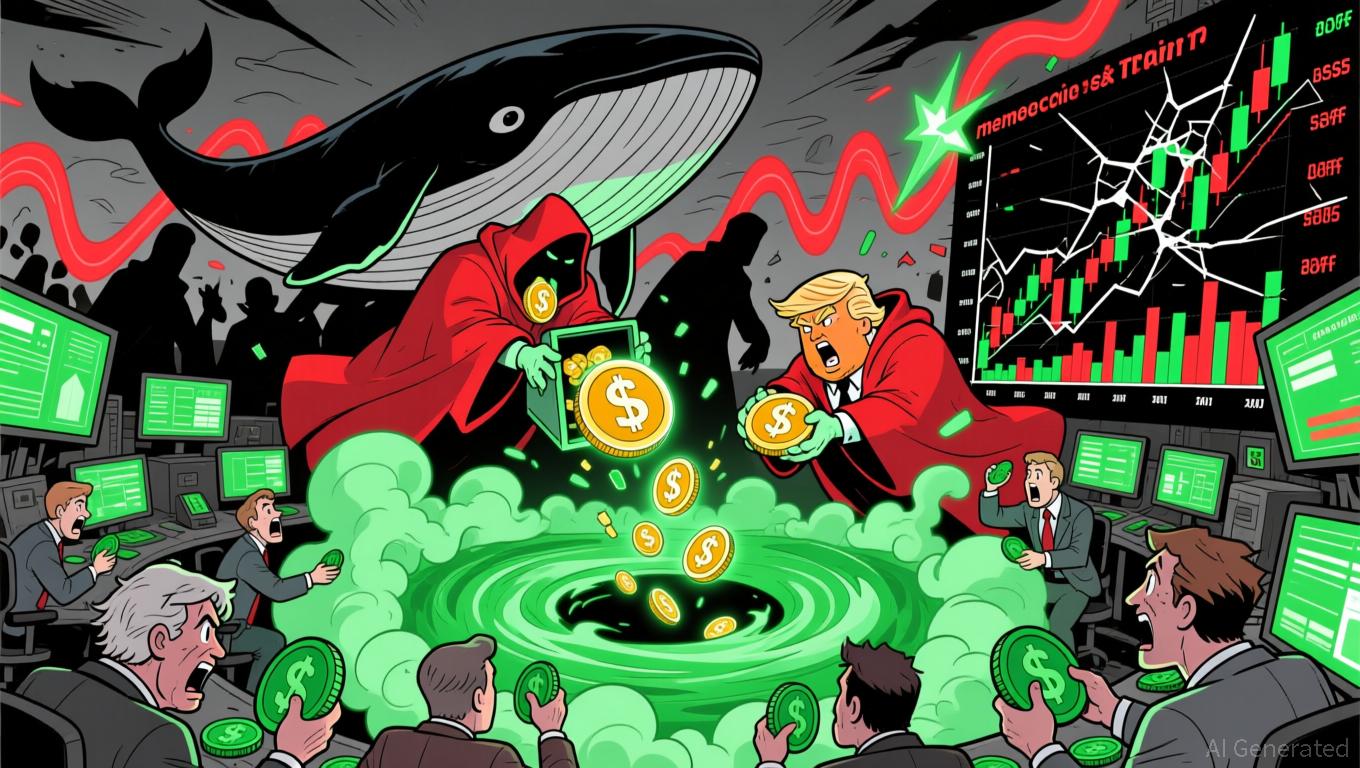
A. Concentrated Holdings: Chainalysis data revealed a stark example of this risk. Around 94% of the combined share of the TRUMP and MELANIA tokens were held by just 40 crypto whales, each with over $10 million worth . Such concentration makes the market highly susceptible to “pump-and-dump” schemes and coordinated exits .
B. **Low Survival Rates:** The sheer volume of token creation has led to abysmal survival rates. On Pump.fun, less than 1% of tokens reached a $50K market cap, and roughly 90% of users ended the year at a loss or under $100 profit . Over 11 million tokens effectively died in 2025 alone .
C. Automated Wash Trading: The prevalence of AI agents and bots can create a “liquidity mirage,” where quoted depth in liquidity pools vanishes during volatility . Token distribution can be heavily skewed, with the top 10 holders controlling a majority of the supply, enabling market manipulation .
Conclusion
Meme coins have cemented their status as the dominant force in on-chain liquidity. They have evolved from a niche subculture into a sophisticated, infrastructure-driven economy that fuels entire blockchain networks like Solana. The sector is characterized by rapid innovation, from AI-driven trading to new launchpad mechanics like USDC bonding curves, which aim to reduce volatility and improve user experience .
However, this evolution has introduced new complexities and risks. The rise of AI agents has created a market where a significant portion of volume is algorithmic, making it harder for retail traders to compete. The volatility remains extreme, and liquidity can be an illusion, easily vanishing when large holders or a herd of AI agents exit simultaneously.
The future of the meme coin market will likely be faster, more automated, and more capital-intensive. Success will depend less on luck and more on execution, sophisticated tooling, and rigorous risk management. For the broader crypto ecosystem, meme coins are no longer a sideshow. They are the engine of on-chain activity, a barometer for risk appetite, and the primary driver of liquidity and revenue for major networks like Solana. The “joke” has become the infrastructure, and its impact is here to stay.