


The financial markets in 2026 confront a reality vastly different from the relative stability of the post-Cold War era. The era of globalization, characterized by open markets and a singular focus on economic efficiency, has given way to a fragmented, multipolar world . This transformation is not a temporary phase but a structural shift with profound implications for investors and global commerce. The conflicts, policy pivots, and supply chain disruptions of 2026 are not isolated incidents but symptoms of a new, permanent state of geopolitical flux that is now the primary driver of market volatility .
A Paradigm Shift: The End of the Peace Dividend
For decades, investors operated under the assumption that geopolitical risks were episodic—tail risks that could be largely ignored in portfolio construction. This “peace dividend” has come to an abrupt end. Experts now describe the current environment as a “rupture” in the world order, moving beyond a simple transition . As one report notes, the relatively stable, low-geopolitical-risk environment of the 2010s is over, replaced by a more fragmented and competitive global system where shocks are more frequent and have more lasting consequences .
This shift is driven by a convergence of factors, including rising great-power competition, increasing skepticism toward globalization, and a bipartisan consensus in many nations to prioritize national and economic security over pure efficiency . Governments are no longer passive referees in the global economy but active participants, wielding tariffs, industrial policy, and supply chain interventions as primary tools of economic strategy . This new reality demands a fundamental rethink of how markets function and how portfolios are built.
The New Drivers of Volatility
The market volatility of 2026 is rooted in several interconnected structural changes that are reshaping the global economy.
A. The Rise of the Multipolar World
The defining characteristic of the new global order is its multipolar nature. Instead of a single superpower and a liberal, rules-based system, there are now multiple power centers with competing policy regimes, technology capabilities, and economic priorities . This competition is not just abstract; it has concrete implications for supply chains, capital flows, and trade.
-
Regionalization Over Globalization: Global trade is becoming more regionalized and fragmented . Companies and governments are no longer optimizing solely for cost but are adding resilience, control, and geopolitical alignment to their decision-making matrix. This has led to the “rewiring” of global supply chains, with capital being deployed across multiple geographies to build capacity, redundancy, and infrastructure .
-
The Capex Supercycle: This rewiring of global trade is driving a massive, multi-year capital expenditure (capex) supercycle. Investment is surging in energy, infrastructure, and industrials as countries seek to create more localized and secure production networks . This is not just a U.S. reshoring story; significant investment is flowing into Asia, Mexico, and other regions tied to supply chain redeployment .
B. Energy Chokepoints and Resource Nationalism
The conflict in the Middle East, particularly the effective closure of the strategic Strait of Hormuz, has become a stark illustration of how geopolitical events can cascade through the global economy . This chokepoint, through which a significant portion of the world’s oil flows, became a central source of market turmoil.
-
Supply Shocks and Inflation: The closure of the Strait of Hormuz was one of the biggest oil supply shocks in history, pushing crude oil prices above $100 per barrel and triggering a “stagflationary scenario”—a period of weakening growth alongside rising inflation . The International Monetary Fund (IMF) projected global growth to moderate to 3.1% while global inflation rose to 4.4% .
-
Fragmentation of Energy Markets: The conflict highlighted the fragmentation of energy markets. While oil exporters outside the Middle East, such as those in Latin America, benefited from higher prices, energy-importing nations in Asia and Europe faced deteriorating trade balances and rising inflationary pressures .
-
Impact on Commodity-Dependent Economies: The crisis had a disparate impact. For instance, while Colombia and Nigeria benefited from higher oil prices, commodity importers like South Korea, South Africa, and India were negatively affected . The tanker market itself was described as a “hostage” of geopolitics, with freight rates and cargo flows being dramatically reshaped by the crisis and the subsequent reopening of the strait .
C. The Technology Race
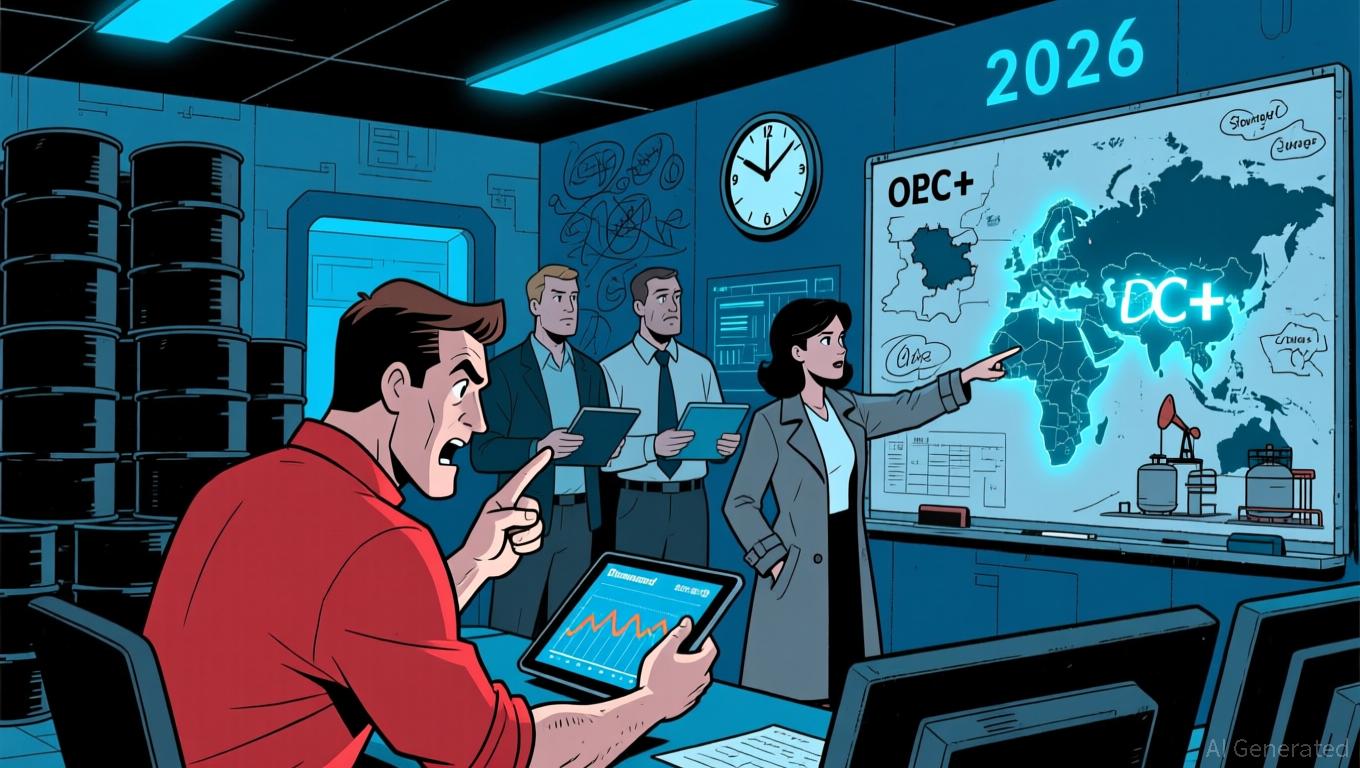
The race for technological leadership, particularly in artificial intelligence (AI), is now deeply intertwined with geopolitics. The governments are increasingly deploying both “offensive” strategies (domestic investment) and “defensive” measures (export controls) to secure a competitive edge .
-
Strategic Asset: AI infrastructure and the energy it consumes are now seen as strategic assets. The massive investment in the AI industrial buildout, estimated at $2.9 trillion, is so significant that it accounts for about a quarter of the expected GDP growth in the U.S. for 2026, insulating the economy from what would otherwise be a more severe recessionary impact from the energy crisis .
-
Valuation Risks: While the AI boom is a major growth driver, it has also led to stretched valuations in technology-related companies, creating a new vulnerability. The IMF warned that a disorderly correction in AI-related share prices could pose a significant risk to financial stability .
-
AI as an Amplifier: Beyond market risks, frontier AI models are also seen as amplifying financial stability risks by lowering barriers for sophisticated cyberattacks and creating new systemic vulnerabilities .
Market Impact and Investment Implications
The confluence of these geopolitical forces has created a volatile and complex landscape for investors, requiring a shift in strategy.
1. The Return of the Correlation Conundrum
The traditional 60/40 portfolio of stocks and bonds, a mainstay for decades, is being tested. During periods of stagflation, stocks and bonds can become positively correlated, meaning they fall in tandem, reducing the diversification benefit of a simple stock-and-bond portfolio . This forces investors to look beyond traditional asset classes for “ballast,” increasing the importance of real assets like real estate and infrastructure .
2. Active Management Over Passive Exposure
In a world where policy distorts capital allocation and dispersion between winners and losers is widening, passive exposure is no longer sufficient . The market volatility of 2026 rewards active security selection, relative-value strategies, and the ability to move capital decisively across regions and sectors . As the world moves further into the fragmentation era, the skills investors once used to navigate emerging markets—rapid sovereign credit analysis, real-time assessment of fiscal credibility, positioning for currency volatility—are increasingly required in developed markets as well .
3. The Case for Fixed Income
In this environment of heightened uncertainty and elevated equity valuations, fixed income is regaining its role as a source of income and a shock absorber.
-
Attractive Yields: Starting yields on high-quality fixed income are at their most compelling levels in years. For example, the yield on the Bloomberg U.S. Aggregate Index was around 4.71% as of early June 2026 . This provides a “cushion” and allows investors to achieve reasonable returns without reaching for risk .
-
Diversification: High-quality bonds can once again provide diversification benefits in a portfolio, offering a hedge against equity market downturns and a source of stability during risk-off episodes .
-
Selective Opportunities: Within fixed income, opportunities exist in U.S. agency mortgage-backed securities (MBS), global government bonds, and emerging market debt, which has shown resilience despite geopolitical stress .
4. Navigating Emerging Markets
Emerging markets (EM) are facing a complex and differentiated outlook.
-
Resilience and Dispersion: While EM debt faced volatility following the outbreak of the Iran conflict, the asset class entered 2026 from a position of strength with many countries exhibiting strong fundamentals . However, the impact of the energy shock varies widely.
-
Differentiated Opportunities: As global supply chains rewire, certain countries with credible central banks, commodity export capacity, or the ability to capture larger shares of the global supply value chain are seeing their fundamentals improve . For instance, the removal of Venezuelan President Nicolás Maduro from power in a U.S. military operation led to sweeping economic reforms that were well-received by markets, driving a rally in Venezuelan assets .
-
Vulnerabilities of Importers: Conversely, energy importers, particularly in Asia, are facing severe headwinds. Countries like Indonesia, Sri Lanka, and Pakistan were forced to implement policy responses, from maintaining fixed fuel prices to imposing fuel quotas, to address potential oil supply disruptions .
Conclusion
The year 2026 marks a definitive turning point. Geopolitics is no longer a source of occasional volatility but the defining force shaping the investment landscape. The era of open borders and economic efficiency is being replaced by a world of fractured alliances, state intervention, and strategic competition. For investors, the message is clear: the old playbook no longer applies. Success will hinge on adapting to a new paradigm where resilience, active management, and a deep understanding of geopolitics are not just advantages but necessities for navigating an increasingly complex and volatile world.